Get In Touch

 October, 17
When you look at electric delivery vehicle, you can see that these are not just about replacing diesel engines with batteries. Manufacturers are innovating a lot. They are coming up with full ecosystems around vehicles, which include energy-efficient components, charging systems, advanced software, etc. Fleet operators in the Middle East are increasingly sourcing from an experienced EV charging hub manufacturer UAE that is ushering in innovations. Check out some of the top innovations from EV manufacturers.
In electric delivery vehicles, battery development happens to be the top innovation. Manufacturers are introducing higher-energy battery packs. These allow trucks and vans to cover further distance between charges. It is particularly useful for delivery routes that involve:
Modular battery systems are also a part of many new electric commercial vehicles. Fleet operators can choose various battery capacities on the basis of daily mileage, payload requirements, and route length. A lighter battery may be required for a small local delivery van to ensure high efficiency. For extended range, a larger battery pack may be required for a regional logistics vehicle.
Fleet operations are being transformed by fast-charging capability. Manufacturers are designing vehicles that are able to recharge much of their battery capacity during driver shift changes, loading periods or scheduled breaks. It can reduce downtime. It is able to make electric fleets more practical for businesses that have demanding delivery schedules.
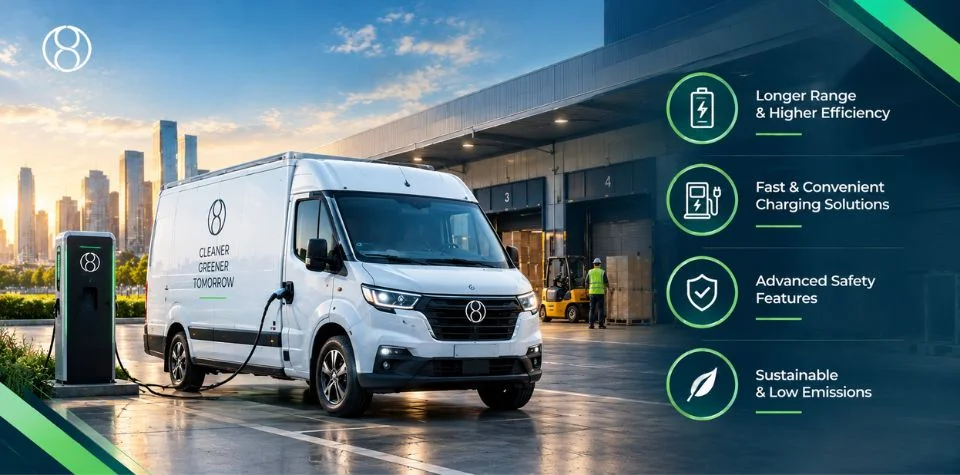
Smart charging is essential too. When renewable energy availability is higher or demand for electricity is lower, connected charging platforms can schedule charging automatically. Fleet managers can make all those vehicles a priority that need to leave first. They can avoid charging all vehicles at the same time. They are also able to monitor the use of energy across multiple locations.
These days, when you look at any delivery vehicle producer, you can find modern electric delivery vehicles being connected through telematics systems increasingly. Such digital platforms can provide fleet managers with real-time information about:
For instance, a logistics manager can identify a vehicle with low battery charge. Before its route is disrupted, he can redirect it to a nearby charging station. Telematics can consider elevation, delivery density, traffic, and energy consumption to recommend more efficient routes.
Blending AI with vehicle data, manufacturers are helping businesses to predict maintenance requirements. It can prevent unexpected breakdowns. Fleet managers can ensure the availability of vehicles during peak delivery periods.
Delivery vehicles have to start and stop often, especially in urban areas. Manufacturers are using regenerative braking systems for energy recovery whenever the vehicle applies brakes or slows down. Some manufacturers are also exploring energy-efficient climate control features, heat-pump systems and heat-pump systems.
With vehicle technology showing constant improvement and charging networks expanding constantly, electric delivery fleets are sure to play a big role in faster, cleaner, and more affordable logistics. While sourcing these vehicles, delivery service providers need to ensure the presence of these innovations from manufacturers.
Your email address will not be published. Required fields are marked *