Get In Touch

 October, 1
A delivery route may show 105 kilometres when the stops are added together.
The van still travels farther once depot movement, missed addresses, parking searches, diversions, and the return journey enter the day. Traffic can keep the vehicle running long after the planned distance has been covered.
A heavier morning load can also use more energy than the same route later in the afternoon. Real range planning begins with the complete working day, beyond the customer list alone.
The route starts before the first parcel reaches a customer and continues after the final delivery has been completed.
A useful distance estimate may include:
These kilometres can look minor when viewed separately, yet they may take a noticeable share of the available range across a busy shift. Recording them during a pilot route gives your team a firmer starting point than estimates based only on customer addresses.
Vehicle weight changes throughout many delivery routes, so one payload figure gives only a partial view of energy use.
A van carrying parcels may leave the depot close to its heaviest point and gradually become lighter, while a collection route grows heavier after each stop.
Mixed routes can move in both directions as deliveries and returns enter the same schedule.
An electric delivery vans manufacturer can help you compare usable range with cargo volume, payload, road speed, gradients, and the order in which the load changes. This discussion can also reveal whether one vehicle suits the full route or splitting the work across two smaller runs creates a steadier margin.
A van can travel close to the planned distance and still use more energy because the journey takes longer than expected. Traffic queues, loading-bay delays, repeated acceleration, and time spent finding an address can extend the working day without adding many visible kilometers.
Cabin cooling also continues while the driver waits, especially during hot weather or long urban shifts.
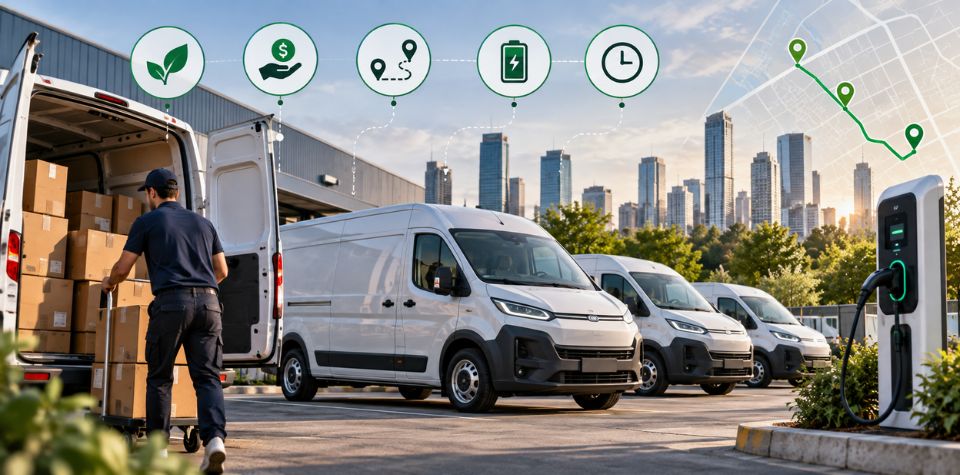
You may find it useful to compare distance with route duration, average speed, stop time, and climate-control use.
A route that looks comfortable during a quiet trial can become much tighter during weekday traffic, seasonal demand, or a hotter part of the year.
A working reserve gives drivers room for ordinary changes that appear after dispatch. An urgent collection, a closed road, a busy loading area, or a longer return trip can quickly consume the remaining planned range.
The right reserve depends on route type, charger access, weather, payload, and the availability of another vehicle. An EV battery supplier can help explain usable battery capacity, pack chemistry, thermal behaviour, and the charge range suited to regular commercial use.
The aim is to finish the route with a useful margin that supports the final delivery and the return to base, even when the day changes after departure.
The first route estimate becomes more accurate after several days of real deliveries. Starting charge, ending charge, actual distance, payload, traffic delay, route duration, and energy use can show how the same vehicle behaves across different shifts. After a few weeks, patterns often become visible across similar routes and working days.
One route may keep a comfortable margin, while another may need an earlier departure, a different van, a planned charging stop, or a smaller delivery zone.
Our fleet capabilities include GPS tracking, route optimisation, telematics, and charging support, which give operators several ways to compare the original plan with the work completed on the road.
A reliable electric delivery route leaves room for the parts of the day that rarely appear in the first spreadsheet. Depot travel, changing payloads, traffic, weather, failed deliveries, and late collections all draw from the same available range.
Small changes in delivery density or return travel can turn a comfortable route into a tight one, so the plan may need adjusting as real fleet data builds.
Our work across electric delivery fleet vehicles, batteries, industrial transportation systems, commercial vehicles, and commercial charging helps us look at the full delivery day before discussing a vehicle or route setup.
If you’re planning routes for an electric delivery fleet, get in touch with us today and let’s talk through your operating requirements.
Your email address will not be published. Required fields are marked *