Get In Touch

 September, 22
Today, you can see major changes in the electric vehicle industry. It is not only about passenger cars anymore. There is a shift into commercial transportation, warehousing, construction, logistics, mining, government operations, and other specialized sectors.
At a time when business owners are looking for cleaner, more efficient vehicles, an EV original equipment supplier must do more than just manufacture electric vehicles. Take a look at how the best industrial vehicle manufacturers are redefining EV original equipment manufacturing processes today.
When it comes to manufacturing EV original equipment, the biggest change that you can see today is the shift toward purpose-built vehicles. Manufacturers are not developing just one platform for general use. They are also coming up with EVs for well-defined applications. It is possible to design each type of vehicle around their intended purpose or environment, including:
For industries such as logistics and last-mile delivery, this application-focused approach is especially useful. It is possible to optimize compact electric delivery vehicles for urban routes. On the other hand, heavy-duty electric trucks can be designed in a special way to handle freight transportation requirements.
Modern EV manufacturing increasingly involves:
When manufacturers understand the needs of each sector, they can improve the functionality of vehicles as well as reduce any unnecessary specifications.
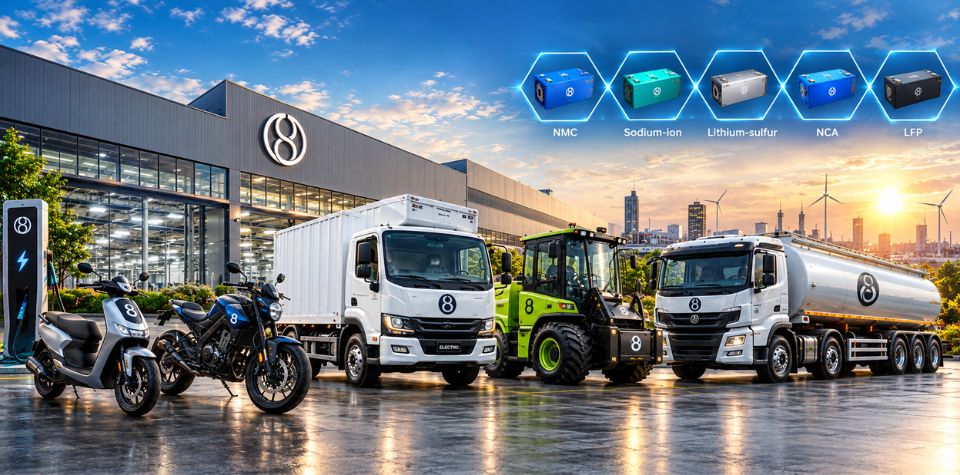
In EV manufacturing, battery technology is now playing an important role. It is not just another vehicle component. Due to this reason, modern manufacturers are now developing and integrating various types of battery technologies. These include:
Due to this broader battery strategy, manufacturers can now develop vehicles according to varied requirements for:
For commercial fleets, where it is necessary to minimize vehicle downtime, there is new potential due to the use of battery-swapping systems. Because of such integration, the manufacturing process can now be aligned more closely with real-world fleet requirements.
Expanding Beyond Conventional Automotive Manufacturing
It is also easy to find almost every leading industrial car manufacturer trying to explore new things. They are no longer limiting themselves to the production of light commercial vehicles and traditional cars. When you look at the modern EV manufacturing ecosystem, you can find it covering:
The same principle extends into demanding sectors. When you take a look at factory utility vehicles, electric mobile scissor lifts, crane carriers, rock crushers, mining machines and electric drilling rigs, you can find out how industrial equipment can be electrified now. This diversification is redefining OEM processes. Manufacturers can now serve multiple industries with their flexible engineering capabilities.
It is out of question to manufacture an EV without considering how it will be charged. The modern EV ecosystem increasingly connects vehicle production with charging infrastructure. Alongside electric vehicles, manufacturers are now developing commercial charging solutions, DC fast chargers, rapid AC chargers and different charging standards.
This integrated approach can make it easier for fleet operators to transition into electric transportation. For example, a delivery service provider may need vehicles as well as dependable charging infrastructure to ensure seamless operations for its fleet. When both elements are considered during the manufacturing and deployment process, OEMs can develop more practical electric mobility solutions.
The demands of fleet owners are now having a big impact on how EVs are engineered and manufactured. Business owners are now looking for vehicles that are able to perform reliably throughout demanding schedules, every day, as well as support their sustainability objectives.
Due to this reason, manufacturers are now encouraged to provide commercial users with purpose-built electric cars, delivery trucks, buses, cargo vans and utility vehicles. Naturally, a strong EV manufacturing process takes various factors into account, such as:
These can work as zero-emission alternatives for freight movement.
It is great to see how the best manufacturers are now redefining EV original equipment manufacturing processes. Partner with the right industrial car manufacturer; you will be able to get high-quality equipment and components in your ordered vehicles.
Your email address will not be published. Required fields are marked *