Get In Touch

 August, 11
Two delivery vans can cover similar routes and still age very differently. One may return with plenty of charge and spend the night on a slower depot charger. The other may arrive nearly empty and rely on high-power charging before the next shift.
Both vehicles keep working, yet their batteries experience different levels of heat, discharge, and time at a high charge.
Those small differences repeat every day. Over months, the charging routine starts shaping range, reliability, and replacement timing.
The next route should guide how much energy the vehicle carries at the start of the day.
A short urban run with regular depot returns may need a smaller charge window than a long route with heavy payloads, traffic delays, and few charging opportunities.
Starting every vehicle at the same percentage can leave lighter-use units sitting at a high charge for longer than their work requires.
An electric delivery vans manufacturer can help fleet teams connect usable battery capacity with route length, payload, weather, and expected stops. This route-based approach gives drivers a practical reserve while keeping the charging routine close to the work each vehicle will perform.
Fast charging earns its place when the operating schedule leaves a short gap between demanding routes.
A fleet may use it when:
Slower depot charging can handle regular overnight needs, while high-power charging can support time-sensitive gaps.
Using each option for the job it suits helps the fleet keep moving and controls repeated heat exposure.
Battery temperature often rises during heavy driving, repeated acceleration, steep routes, and high-speed charging.
A van returning from a demanding route may already carry extra heat before the charging session begins.
Charging areas with suitable airflow, clear spacing, and temperature monitoring can support a steadier routine.
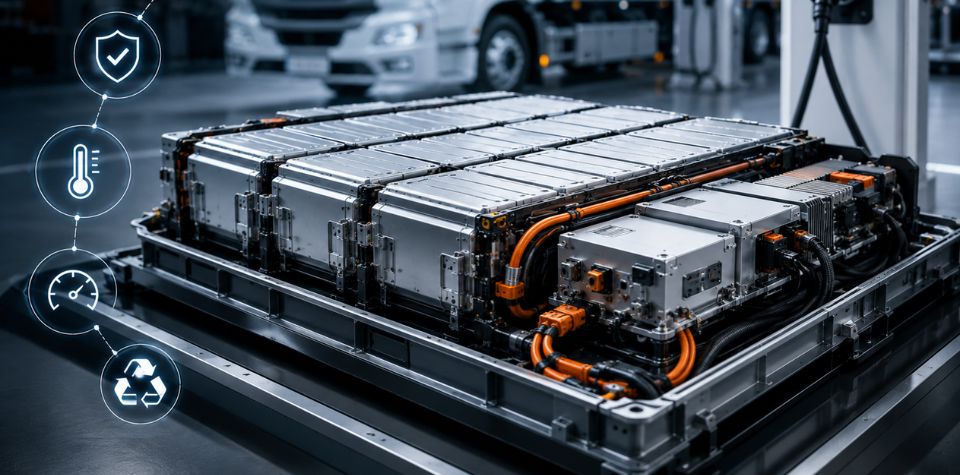
Fleet managers may also review whether the vehicle has enough time to cool after a heavy shift, especially during hot weather or back-to-back operations. Our work with commercial EV batteries and charging systems gives us a practical view of how route load, charger power, and thermal management interact across the day.
Commercial batteries usually benefit from a working range that leaves room at both ends. Repeatedly reaching a very low charge can create operational pressure when traffic, detours, or extra stops extend the route.
Keeping a practical reserve gives the driver more flexibility and limits last-minute dependence on fast charging.
A vehicle that reaches a full charge early and then sits for many hours also spends extra time at a high state of charge.
Fleet schedules can often improve both patterns by matching charge targets with departure times and expected route demand.
Battery life becomes easier to manage when charging habits are visible across vehicles, routes, and drivers.
Useful records may include:
An EV battery supplier can also explain chemistry-specific limits, battery management data, and suitable charge windows. These records help fleet teams spot patterns early and adjust schedules with greater confidence.
Battery wear often builds through routines that feel harmless at the time. A vehicle may charge faster than the route requires, return with almost no reserve, or sit fully charged for hours before the next shift begins. Once those habits repeat across a fleet, the effect becomes easier to see in range, charging time, and battery performance.
Our work across EV batteries, delivery vehicles, fleet systems, and commercial charging helps us look at the whole routine rather than one charging session in isolation.
Reviewing your fleet’s charging setup? Get in touch and let’s talk.
Your email address will not be published. Required fields are marked *